Whether you're managing a construction site, a remote utility station, or a pop-up event space, there are plenty of locations where traditional wired cameras just aren't feasible. That's where solar video surveillance systems come in.
These self-contained units provide 24/7 video monitoring using nothing more than sunlight, battery storage, and optional cellular data. And while they sound like the perfect solution for off-grid security, they're not without trade-offs.
In this article, we'll break down the real-world pros and cons of solar surveillance so you can decide whether it's the right fit for your site, your team, and your budget.
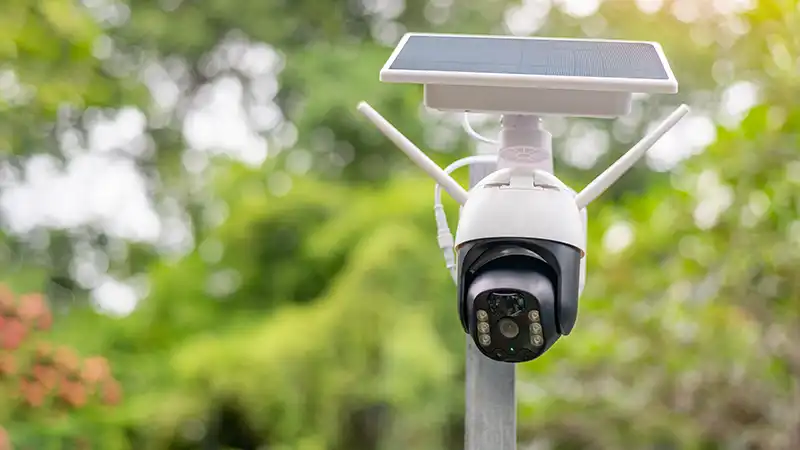
How Solar-Powered Surveillance Works
At a glance, solar video surveillance systems look simple, but there's a lot going on behind the scenes.
Most setups include:
- A solar panel (or panels) that harvest energy from the sun
- A battery pack that stores power for night use and cloudy days
- One or more cameras: fixed, pan-tilt-zoom (PTZ), or smart-enabled
- A mounting system (pole, trailer, or wall)
- And in many cases, a wireless router or LTE modem for cloud connection
Some systems are fixed installations; others are mounted on mobile trailers for temporary use. Most modern models support motion alerts, remote viewing, and cloud storage, just like traditional wired IP cameras.
Solar surveillance excels in places where power access is unreliable or nonexistent, such as:
- Construction zones and job sites
- Agricultural fields and remote storage yards
- School perimeters or athletic fields
- Utility infrastructure (water towers, substations, solar farms)
- Parks, festivals, or temporary events
- Large parking lots or vacant properties
Solar powered security cameras prioritize energy independence, deployment speed, mobility, and flexibility in areas where traditional surveillance can't go.
Pros of Solar Video Surveillance
Solar surveillance systems have earned a place in modern security plans for the following reasons:
1. True Remote Deployment
No power? No problem. Solar powered security cameras are entirely self-sufficient, making them ideal for areas without electrical infrastructure. Just set it up, aim the panel, and go live.
2. Lower Operating Costs Over Time
Once installed, solar powered CCTV security cameras cost almost nothing to run. There are no power bills, and many units can store footage locally or transmit over cellular networks, eliminating the need for trenching cable or paying for wired internet.
3. Fast, Flexible Setup
Need coverage tomorrow? You've got it. Solar-powered systems (especially trailer-based ones) can be deployed in a matter of hours.
4. Eco-Friendly and Grant-Friendly
Solar aligns with environmental goals. For municipalities, schools, or publicly funded projects, solar options may qualify for sustainability grants, rebates, or ESG reporting requirements.
5. Resilient During Outages
Your cameras stay up even when the grid goes down. Thanks to built-in batteries, most solar systems continue operating through the night or during blackouts. Some models even trigger alerts when running on backup power.
6. Packed with Modern Features
Many solar systems support:
- Cloud-based monitoring
- AI-enhanced motion detection
- Two-way audio
- License plate recognition
- Mobile app access
In other words: You don't have to sacrifice features for flexibility.
Cons of Solar Powered Security Cameras
As powerful as solar video surveillance can be, it's not always the best fit. Here are the key drawbacks to keep in mind:
1. Weather and Sunlight Dependency
No sun = no charge. If your location doesn't get consistent sunlight (or if your cameras are shaded for much of the day), performance will suffer. Battery backups can carry you through cloudy weather or overnight, but only for so long. Winter months can be especially challenging without smart battery sizing and placement.
2. Higher Upfront Cost
Solar setups can be more costly to buy. Between solar panels, batteries, and weatherproof enclosures, you'll pay more upfront than for a traditional wired camera system. LTE connectivity and cloud storage subscriptions can also add to the bill.
That said, many businesses save in the long run by avoiding trenching, permitting, or electrical work.
3. Battery Maintenance and Lifespan
Batteries don't last forever, and you may need to replace batteries every 2–5 years. Extreme heat or cold can degrade battery life faster, and poor maintenance leads to performance issues.
4. Vandalism and Theft Risk
If it's out in the open, it's a target. Rural or remote locations without on-site staff can make solar surveillance units vulnerable to tampering. Locking mechanisms, tamper alerts, or camouflage enclosures can help, but not eliminate the risk.
5. Connectivity Limitations
Signal strength matters. Unless you're using local recording only, you'll need a solid LTE or Wi-Fi signal. In low-signal zones, footage can lag or fail to upload, rendering the purpose of live surveillance ineffective.
When Solar Video Surveillance Makes Sense
Not every site needs solar, but it's the ideal solution for the right environments. Here's when it makes the most sense:
Remote Locations Without Power
If trenching power lines isn't practical, solar provides a fully independent security solution. Think utility infrastructure, cell towers, farms, and construction zones.
Temporary or Mobile Deployments
Solar surveillance shines in short-term applications:
- Job sites that move frequently
- Outdoor events or festivals
- Seasonal businesses
- Emergency response or disaster recovery
Trailer-based solar units can be relocated in minutes and redeployed as needed.
Sustainability-Minded Projects
For municipalities, schools, and businesses with ESG targets or green initiatives, solar surveillance checks the boxes for sustainability, energy efficiency, and low-impact operations.
Backup or Redundant Coverage
Even in powered areas, solar systems can serve as:
- Failover security during outages
- Additional coverage for blind spots
- Supplemental monitoring during peak hours or events
When Solar May Not Be Ideal
- Urban or indoor locations with stable power access
- Areas with weak sun exposure (heavy shade, poor orientation)
- Sites with high camera density, where solar may not keep up with power demands
- Installations requiring wired integrations to larger building systems
In such cases, a traditional wired or hybrid solution may offer better reliability and cost efficiency.
How to Choose the Right Solar Surveillance System
Not all solar security systems are created equal. If you're thinking of making the switch (or expanding your coverage), here's what to consider:
1. Assess Your Surveillance Goals
Start by defining what you need to monitor:
- Entry points?
- Equipment or materials?
- Large perimeters?
- Motion detection and alerts?
- Remote access?
This will determine the number and type of cameras you need (fixed vs. PTZ, HD vs. standard, etc.).
2. Check Solar and Battery Capacity
Look beyond the panel size:
- Is the battery bank large enough to handle 2–3 days of cloudy weather?
- Is the system sized for your local sun conditions?
- Are the batteries easy to maintain or replace?
A good system should balance peak energy production with real-world consumption patterns.
3. Ensure Reliable Connectivity
If you need remote access or cloud backup:
- Does the system support 4G/LTE or Wi-Fi?
- Will it store footage locally if the connection drops?
- Can it alert you via SMS or email?
Poor connectivity can undermine an otherwise solid setup.
4. Evaluate Mounting and Mobility
Ask yourself:
- Are you mounting to a fence, a pole, or a trailer?
- Do you need a permanent solution or one that can be relocated?
Choose a system that matches your site's physical demands and whether your needs may shift.
5. Choose the Right AV Partner
The best hardware can fall short without expert planning and installation. A trusted AV/security integrator will:
- Perform a site survey
- Recommend the right panel/camera combination
- Handle permitting, installation, and testing
- Offer support, training, and future upgrades
Why Work With CGS
When it comes to protecting your property with solar video surveillance, the gear is only half the story. The other half is getting a system that's appropriately sized, expertly installed, and fully supported.
At Carolina Georgia Sound, we help businesses, municipalities, and job site managers deploy reliable, future-ready solar security systems. Whether you're monitoring a construction site, a school campus perimeter, or critical infrastructure in a remote location, we'll help you:
- Choose the right equipment for your environment
- Ensure optimal power, battery, and data performance
- Integrate your solar system with existing security infrastructure
- Train your team and provide ongoing support
Need eyes on a site with no power? Let's talk. Contact CGS today to schedule a walkthrough.