Businesses across the Southeast are asking the same question: “How much does a commercial sound system installation actually cost, and what should I be thinking about before we upgrade?”
The answer depends on your space, your goals, and the partner you choose to design and install the system. This article will guide you through the key factors that influence cost and demonstrate how to make a smart investment that balances performance, budget, and future growth.
What a Commercial Sound System Actually Includes
Today’s systems are more intelligent, more scalable, and often network-connected. They’re designed to make sound clearer, more focused, and easier to manage across different spaces and use cases.
Here’s what typically goes into a modern commercial sound system:
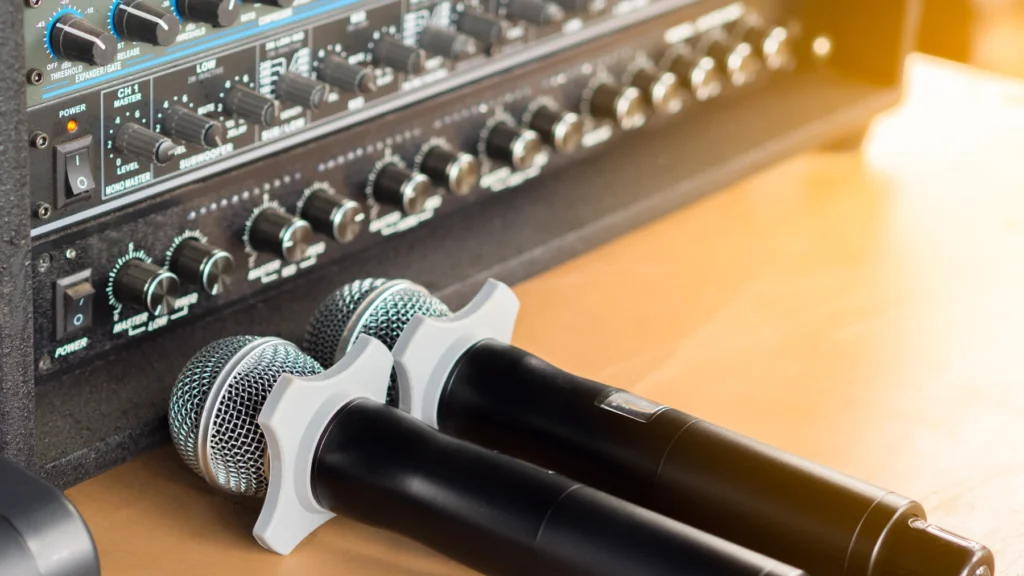
- Microphones: These may include wireless handhelds, tabletop boundary mics, ceiling-mounted arrays, or lapel mics, depending on the room's intended use.
- Speakers: Wall-mounted or in-ceiling speakers are strategically placed to ensure even sound coverage, whether in a single room or across multiple zones.
- Amplifiers & DSPs (Digital Signal Processors) are components that work behind the scenes to power your audio and fine-tune the sound quality, eliminating echo, balancing levels, and enhancing clarity in challenging spaces.
- Control Systems: Wall panels or tablets enable users to switch inputs, control volume, or toggle between modes without needing to call the IT team.
- Cabling, Mounts, and Network Integration: Clean installs matter. Your system is only as good as its infrastructure and how well it plays with your existing IT setup.
Even for a modest-sized conference room, the proper setup isn’t “plug-and-play.” It’s designed and installed for real-world use.
4 Factors That Drive the Cost of a Commercial Sound System
Whether you’re outfitting one room or ten, the final cost of your setup depends on several key factors. Below, we break down the four most important cost drivers so you can budget smartly and avoid surprises.
1. Room Size and Acoustics
A small, carpeted huddle room will naturally cost less to outfit than a large boardroom with glass walls and a vaulted ceiling.
Larger or oddly shaped rooms need more microphones, speakers, and acoustic calibration to avoid dead spots, echo, or muffled sound. If your space features a lot of glass, concrete, or other reflective surfaces, you may also require DSP tuning or acoustic treatments to maintain clarity.
Cost Drivers:
- Acoustic treatments: Glass/concrete rooms need DSP and possibly acoustic panels.
- Room shape: Irregular layouts require more speakers and tuning.
- Seating density: More mics to cover more people without feedback.
CGS Tip: If the room wasn’t originally designed for meetings, the right integrator can help you work with (not against) your room’s natural acoustics.
2. Use Case and Complexity
If you need basic background music or paging, that’s the low end. If you need to host remote meetings, training sessions, or hybrid town halls, you'll now require microphones, speaker zoning, integration with Zoom/Teams, and potentially voice lift systems.
Managing multiple rooms from a central control panel? You’re entering multi-zone, AV-over-IP territory. The more interactive and multi-functional the room, the more your system needs to adapt. That’s where design becomes critical.
Cost Drivers:
- Conferencing platform: Zoom/Teams integration adds licensing + DSP programming.
- Voice lift/hybrid events: Requires beamforming microphones and additional processing.
- Multi-room control: Centralized AV-over-IP requires network switches + enterprise controllers.
- Phased rollout: Costs may be spread across quarters, but the total goes up with expansion.
Base Ranges:
- Small rooms: $3K–$10K
- Mid-size: $10K–$20K typical, up to $50K
- Enterprise: $50K–$100K+
3. Equipment Quality and Brand Selection
High-end brands like Shure, Biamp, QSC, and JBL Professional offer better audio fidelity, extended warranties, and more robust support ecosystems. That means fewer replacements, fewer issues, and less downtime.
Yes, you could opt for more affordable gear. However, in our experience, cutting corners here typically results in higher security camera maintenance costs and increased user frustration in the long run.
Cost Drivers:
- Brands: JBL/Atlas vs. QSC/Biamp/Shure — premium brands bring better fidelity, support contracts, and warranties, but cost more.
- Control systems:
- Wall switch → inexpensive.
- iPad/tablet interface → moderate.
- Crestron/Biamp enterprise control → expensive.
- Microphone choice: Tabletop vs. ceiling array; wireless vs. wired. A Shure MXA910 array might cost $3K+ just for the microphone.
4. Labor & Infrastructure
Labor costs vary based on the complexity of the install (new construction vs retrofit), cabling and routing through finished ceilings or walls, programming for DSPs or control systems, and integration with your existing IT or AV infrastructure.
If your building has unique constraints (such as historic status, concrete walls, or limited access), your commercial sound system installation may require special coordination.
Cost Drivers:
- Retrofit vs. new construction: Cabling in finished ceilings/walls is labor-intensive.
- DSP & control programming: Adds hours per room.
- Electrical readiness: Dedicated circuits, rack space, conduit routing.
Networking: Audio-over-IP requires network configuration and switch provisioning.
One quick note: Online pricing calculators rarely reflect the actual costs you'll incur and often overlook key line items, such as labor, integration, or post-installation tuning. The most accurate way to obtain a number is through a walkthrough and a brief conversation with your AV partner.
Smart Ways to Stay on Budget (Without Sacrificing Quality)
If you’re working with a tight budget or presenting costs to leadership, here are smart ways to make every dollar count:
Work With What You’ve Got
If you already have quality speakers, existing conduit, or cable runs from a previous system, a good integrator will tell you what can be reused.
At CGS, we regularly help clients upgrade strategically, replacing only what’s outdated or underperforming, and integrating the rest into a modern system.
Prioritize Clarity Over Bells and Whistles
Start with what makes the most significant difference, such as microphone coverage, speaker clarity, positioning, and echo/feedback reduction. Once that’s solid, you can build from there.
Phase Your Upgrades
If you’re managing a growing facility or planning for long-term upgrades, consider a phased rollout. Many of our clients start with the boardroom or primary meeting space, then expand to huddle rooms and training areas later, all while using a consistent, scalable system design.
This not only spreads out the budget but also gives your team time to become comfortable with the technology.
Plan for Growth (Not Just Today’s Needs)
Even if you're only equipping one room, we may suggest using AV-over-IP infrastructure to allow you to easily expand to additional rooms down the road. Likewise, choosing modular control systems or centralized audio processors can save you significant costs when your team or tech stack grows.
Bottom line: A trusted AV partner will help you think two steps ahead without pushing unnecessary gear.
Why Your AV Partner Matters More Than the Gear
The best sound system in the world won’t help you if it’s installed poorly, tuned incorrectly, or too complicated for your team to use. That’s why the most important decision is who you choose to guide you through the process.
At Carolina Georgia Sound, we approach every project like a puzzle:
- What’s the space used for?
- Who needs to hear (and be heard)?
- What’s your existing infrastructure like?
- What’s the budget, timeline, and growth plan?
From there, we design a system that actually fits your needs.
Our team handles everything, from on-site walkthroughs to custom designs, clean installations, network integration, and post-installation training. And we’re not just there for install day. We stay committed for the long haul, providing ongoing support, maintenance, and upgrades as your needs evolve.
Ready to Talk?
Book a site walkthrough or a quick consult with our team, and we’ll help you plan a sound system that’s clear, future-ready, and built to support your business.
→ Schedule a Consult with CGS