Every QSR operator who runs a drive-thru has access to speed-of-service data. Most of them are reading it wrong.
Drive-thru timer systems produce numbers that operators use to evaluate their crews, identify their slowest shift, and compare locations. What the numbers actually measure is the performance of the full system - the people, the process, and the technology - as one unit. When operators read timer data as a crew performance metric, they miss half of what it is telling them.
What a Drive-Thru Timer Actually Measures
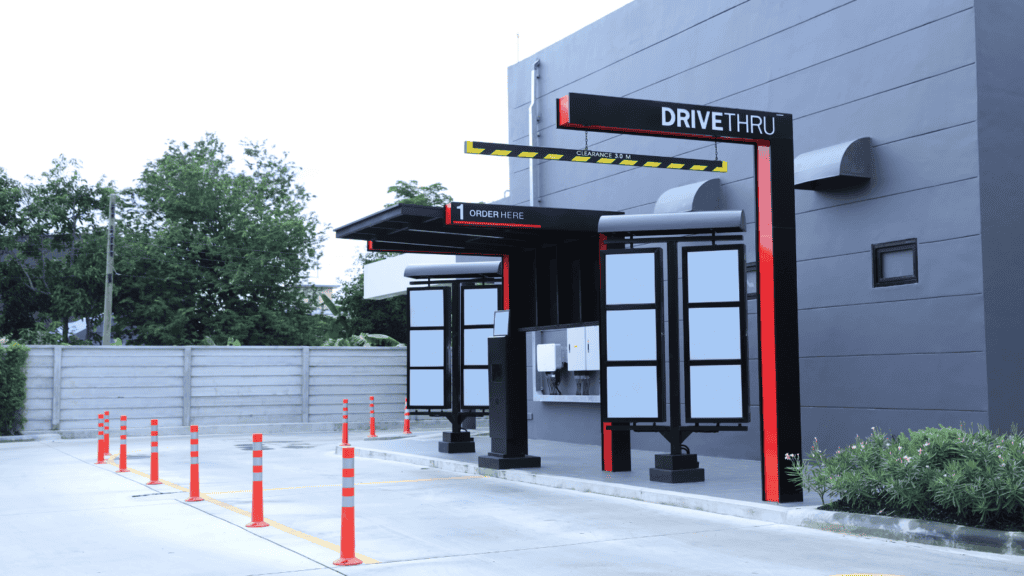
A drive-thru timer system measures the time between detection events: when a car pulls to the menu board, when the order is placed, when the car reaches the window, when payment is taken, when the order is handed off, and when the car pulls away. The system records those timestamps and calculates the time between them.
What the timer cannot do on its own is tell you why those times are what they are. A 45-second window time is a data point. It does not tell you whether the delay was in order accuracy, payment processing, food production, or a crew member who had to ask the customer to repeat their order three times because the headset audio was unclear.
The operators who use timer data well treat it as a diagnostic tool, not a performance report. The number tells them where to look. The investigation tells them what to fix.
The Technology Variables Most Operators Undercount
When speed-of-service numbers are slower than they should be, operators typically look at staffing, training, and production processes. Those are the right places to look. The technology variables are often overlooked, and they account for more time loss than most operators realize.
Headset audio clarity affects order accuracy and confirmation time. A headset system that is producing degraded audio causes crew members to repeat back orders more often, ask for clarification more often, and take longer to confirm before the car advances. That time does not show up as a headset problem in the timer data. It shows up as slow window time.
Speaker post performance affects the ordering experience and order completeness. A speaker post that is producing unclear audio causes customers to speak more slowly, repeat items, and hesitate on upsell responses. That shows up in menu board time.
Loop detector sensitivity affects how accurately the timer captures car positions. A loop detector that is miscalibrated will produce timer data that does not reflect actual transaction times. You can have crew who are executing well and timer data that does not show it.
POS integration affects order handoff time. When the drive-thru timer is not properly integrated with the POS, the correlation between timer events and actual order status breaks down. Operators managing against that data are managing against inaccurate information.
Reading Timer Data as a System Diagnostic
The most useful question a drive-thru timer report can answer is not which shift was slowest. It is where in the transaction sequence the time is being lost, and whether that loss is consistent.
A consistent delay at the menu board that occurs across multiple shifts and multiple crew combinations is almost never a crew problem. It is a speaker post, a loop detector, or an ordering process issue. A consistent delay at the window that tracks closely with specific crew members is a training or staffing issue. A delay that spikes during peak volume and flattens during slow periods is a production or equipment capacity issue.
Timer data that is read at this level of specificity tells a different story than a summary speed-of-service score. And the fixes it identifies are different.
When to Call a Technician
These are the timer data patterns that point to a technology issue rather than a crew or process issue:
- Menu board times that are consistently longer than they were 6 to 12 months ago with the same crew model
- Timer data variance that does not correlate with staffing or volume changes
- Speed-of-service scores that improved when crew changed but reverted when the original crew returned
- Detection gaps where cars are not being recorded in certain positions
- Timer system reporting that stopped syncing with your POS data
Any of those patterns is worth a system assessment. A technician who understands the full drive-thru technology stack can tell you whether the timer data you are managing against is accurate, and what the technology is contributing to the times you are seeing.
What CGS Does
CGS installs, maintains, and services HME drive-thru systems for QSR operators across Georgia, South Carolina, and Ohio. We have OTP Pro certified technicians on staff and a 97% first-trip resolution rate. If your speed-of-service numbers are not where they should be and you have already looked at staffing and process, contact us. The answer might be in the system.
Speed-of-Service Numbers Off? The Answer Might Be in the System.
CGS installs, maintains, and services HME drive-thru systems for QSR operators across Georgia, South Carolina, and Ohio. We have OTP Pro certified technicians on staff and a 97% first-trip resolution rate. If you have already looked at staffing and process, contact us for a system assessment. Call or text 1-800-277-9444 or visit cgsvideo.com.
Request a System Assessment
About the Author
Written by Grant Wycliff, President of CGS. Grant works with QSR operators across Georgia, South Carolina, and Ohio on drive-thru systems, speed-of-service performance, and OTP-certified technology service. CGS is a McDonald's OTP-approved technology partner with OTP Pro certified technicians on staff installing and servicing HME drive-thru systems across the region. Connect with us on LinkedIn.