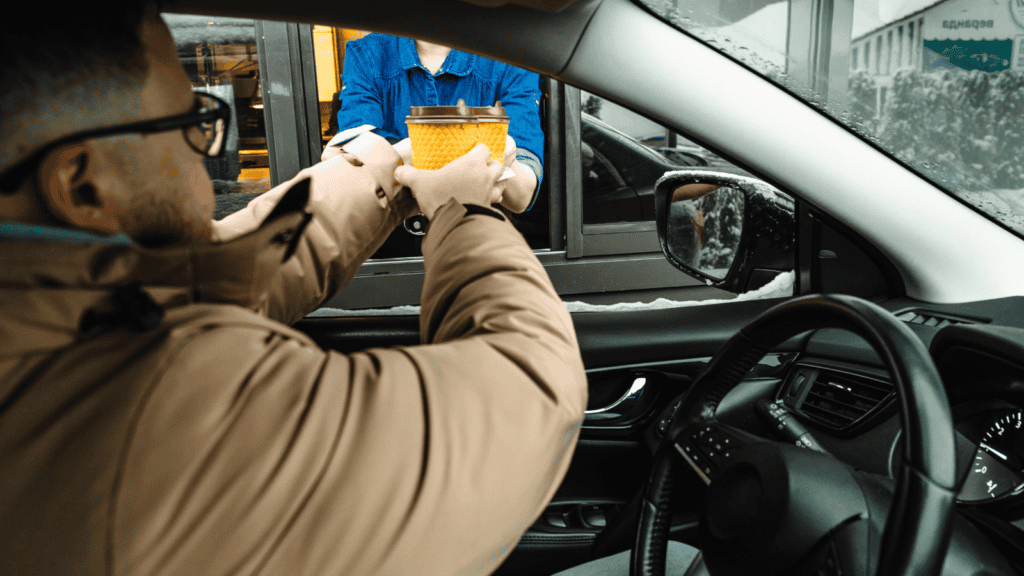
The first cold morning of the season tends to bring the same set of calls. A headset that lasted a full shift last week dies before lunch. Customers at the order point sound like they're talking through a blanket. The timer misses cars, or counts cars that aren't there.
None of these feels like an emergency on its own. Stack two or three of them on top of a holiday lunch peak, and you feel it in your car count.
Most operators treat these as random equipment problems: something broke, call someone, get it fixed. It's a reasonable instinct. But in the service calls and assessments Carolina Georgia Sound (CGS) technicians run every winter, drive-thru cold weather problems are rarely random. They follow the weather, and they show up in the same few places.
This guide walks through what we see in stores when temperatures drop, why it happens, and what you can check now, before it turns into a service call during your busiest weeks of the year.
Why drive-thru cold weather problems are a system issue
Outdoor drive-thru equipment is built to live outside. Cold by itself is rarely what takes it down. What wears it out is the cycle: a freezing night, a mild afternoon, rain, then another freeze. Moisture works its way into seals, connectors and pavement, and anything that was already marginal stops working.
Operators in Ohio see this earlier and harder. A cold snap in Augusta or Columbia produces the same calls, just fewer of them. Either way, the pattern holds: winter doesn't usually create new problems. It exposes the ones already in the system.
1. Headset batteries that don't last a shift
What it looks like: Batteries die early. The team swaps mid-rush, or two people end up sharing a headset during a peak.
Why it happens: Rechargeable batteries deliver less in the cold, and batteries that have already lost capacity with age have less margin to give. A battery that barely made it through a shift in October won't make it in December. Chargers placed near a back door or on an exterior wall make it worse.
What high-performing operators do: They keep chargers in a climate-controlled spot, label batteries with the date they went into service, and rotate them on a schedule. They replace aging batteries before the holiday peak instead of in the middle of it.
2. Muffled or distorted audio at the order point
What it looks like: Customers repeat themselves. The crew asks "can you say that again?" more than usual. Order accuracy slips and nobody can say exactly why.
Why it happens: The speaker post takes the weather head on. Moisture, condensation, debris, and worn seals or grilles all affect how clearly the microphone picks up the customer and how clearly the speaker plays back the crew. Winter wind adds noise on top of that.
What high-performing operators do: Someone checks the order point on a schedule, not just when it sounds bad. They clear debris, look for damage to the housing, and report changes in sound early, while it's still a small repair.
3. Vehicle detection that misses cars, or sees cars that aren't there
What it looks like: The greeting doesn't trigger. Timer data stops matching what the team sees in the lane. Speed-of-service numbers jump or drop for no clear reason.
Why it happens: Many drive-thrus detect vehicles with loops cut into the pavement. Freeze-thaw cycles crack the pavement and the sealant over those loops, and moisture follows the cracks. Other detection methods have their own weather exposure. When detection becomes unreliable, the data you use to manage the drive-thru becomes unreliable with it.
What high-performing operators do: They spot-check the timer against a manual count during a slower part of the day. If the numbers don't line up, they get it looked at before making staffing or scheduling decisions based on bad data.
4. Problems that come and go with the weather
What it looks like: Audio drops out on cold mornings and works fine by afternoon. A problem shows up after rain and disappears two days later.
Why it happens: Exterior connections, conduit and junction boxes collect moisture. Corrosion and contraction cause intermittent faults, which are the hardest kind to fix because they're often gone by the time a technician arrives.
What high-performing operators do: They keep a simple log: date, time, weather and what happened. That log is one of the most useful things a technician can have, because it turns "it acts up sometimes" into a pattern we can trace.
5. Small issues that were already there
What it looks like: Everything worked in the fall, and now several things fail within the same few weeks.
Why it happens: A loose boom mic, a cracked headset cable, a seal that was already worn. In mild weather, the system tolerates them. In cold weather, it doesn't.
What high-performing operators do: They treat late fall and early winter as maintenance season, not repair season. The best time for a preventive check is before the first freeze. The second-best time is now.
What to do next
You don't need a technician to start. A 15-minute walk-through will tell you most of what you need to know:
- Count your headset batteries and note how old they are. Move chargers away from exterior doors and walls.
- Pull up to your own order point and place an order. Listen from the car, then from a headset.
- Look at the pavement over your detection area for cracks or lifted sealant.
- Compare your timer's car count to a manual count for 30 minutes.
- Ask your shift managers what they've been hearing. They usually know first.
- Start a log for anything that comes and goes.
Want a Technician to Check Your Drive-Thru Before the Next Cold Snap?
CGS serves QSR operators across Georgia, South Carolina, and Ohio. A technician can check your headsets and batteries, order point audio, and vehicle detection before the holiday peak. Most winter problems start as small issues already in the system, like an aging battery or a worn seal. Schedule a drive-thru check now, while it is a planned visit and not a mid-peak emergency.
Schedule a Drive-Thru Check
About the Author
Written by Grant Wycliff, President of CGS. Grant works with QSR operators across Georgia, South Carolina, and Ohio on drive-thru systems, preventive maintenance, and full-stack technology service. CGS is a commercial AV and technology integrator with 35 years of experience serving QSR operators, retail, hospitality, and commercial businesses. Connect with us on LinkedIn.