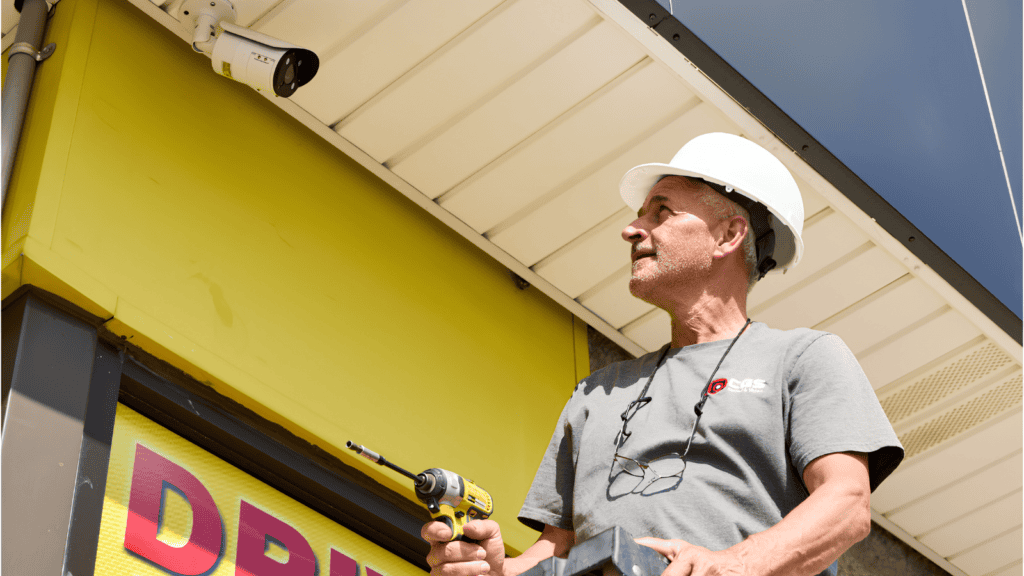
For most McDonald's operators, the last several months have been about one date: January 1, 2027. Assessments, scheduling, installation days in the middle of Q4. If your stores are done, that's real work behind you.
It's natural to treat the install as the finish line. It isn't, quite. Ongoing CCTV compliance is a different job from getting compliant. A camera system that meets requirements on install day is a snapshot. Stores keep changing after the installer leaves, and the system changes with them.
Compliance is a condition, not a certificate
Systems drift. Cameras go offline. Storage fills. Managers turn over. Nobody has to do anything wrong for this to happen. It's what happens to equipment in a busy restaurant over months and years.
So the question for 2027 isn't whether you got there. It's how you'll know you're still there. In our experience, the operators who stay on top of it have answered one thing early: who is responsible for checking.
That sounds obvious, but it's easy to leave open. During the push to January 1, compliance had a project owner, a deadline and a schedule. After the deadline, the project ends, and the ongoing work doesn't automatically land on anyone's list. Six months later, nobody is quite sure who was supposed to be watching the system. The fix is a decision, not a purchase: name the owner, set the schedule and decide what happens when something fails.
5 Things that change after the install
1. Cameras go offline quietly
A power interruption, a failed connection or a network change can take a camera down without alerting anyone. The recorder keeps running on the rest. Unless someone checks, or the system is monitored, a gap can sit there for months. Across a multi-unit portfolio, the odds that every camera in every store is working on any given day go down as the store count goes up.
2. Recorders and storage age
Hard drives fail. Retention shrinks as settings change or storage fills. The system that kept the right amount of footage in December may not in July. The only way to know is to check how far back the footage actually goes, store by store, on a schedule.
3. Firmware and security updates
IP cameras and recorders are network devices. They get firmware and security updates, and a device that never gets updated is an exposure on your store network. Someone needs to own that, and it needs to be done carefully, because an update applied at the wrong time can take a camera or recorder offline in the middle of a shift.
4. The store changes around the cameras
Remodels, new equipment, new signage and layout changes all affect what a camera can see. A view that was right on install day can be blocked a year later.
5. People change
Managers leave. Logins stay. The person who knew how to export footage moves to another store. Access that isn't updated is both an operations gap and a security risk. The fix is simple but easy to skip: remove access the day someone leaves, and make sure at least two current managers in each store can pull footage.
Questions to ask about ongoing compliance
Whether you handle this in-house or with a partner, these questions tell you where you stand:
- Who checks that every camera is recording, and how often?
- What happens, and how fast, when a camera goes down?
- Who handles firmware and security updates?
- Where is your system documentation, and is it current?
- Who has access, and how is access removed when someone leaves?
- What triggers a review: a remodel, new equipment, a change in brand requirements?
If the answer to most of these is "we'd figure it out," that's the gap.
Where a managed service fits
You can handle this in-house. Some operators do, especially with a strong operations lead in each market. For many multi-unit operators, though, it's another recurring job on a list that's already long. A managed CCTV service puts the checks on a schedule, with someone accountable for them.
If you're not finished yet
If some of your locations aren't done, don't wait for the new year to make a plan. Know exactly where each store stands and what's left. A site assessment is the place to start, and it costs nothing.
What to do next
- Name one person per market who owns the camera check.
- Set a monthly check: every camera live, recorder time, oldest recording, one export test.
- Keep a simple documentation folder for each store.
- Review who has access every quarter.
- Add a camera check to every remodel and equipment change.
Talk Through Ongoing CCTV Compliance Across Your Stores
CGS serves McDonald's and QSR operators across Georgia, South Carolina, and Ohio. Compliance on install day is a snapshot, and cameras, storage, access and store layouts all change afterward. We can talk through who should be checking, how often, and what happens when a camera goes down. If some of your locations are not finished yet, we can help you work out where each store stands.
Talk to CGS About CCTV Compliance
About the Author
Written by Grant Wycliff, President of CGS. Grant works with McDonald's franchisees and QSR operators across Georgia, South Carolina, and Ohio on CCTV and security systems, camera compliance, and full-stack technology service. CGS is a commercial AV and technology integrator with 35 years of experience serving QSR operators, retail, hospitality, and commercial businesses. Connect with us on LinkedIn.