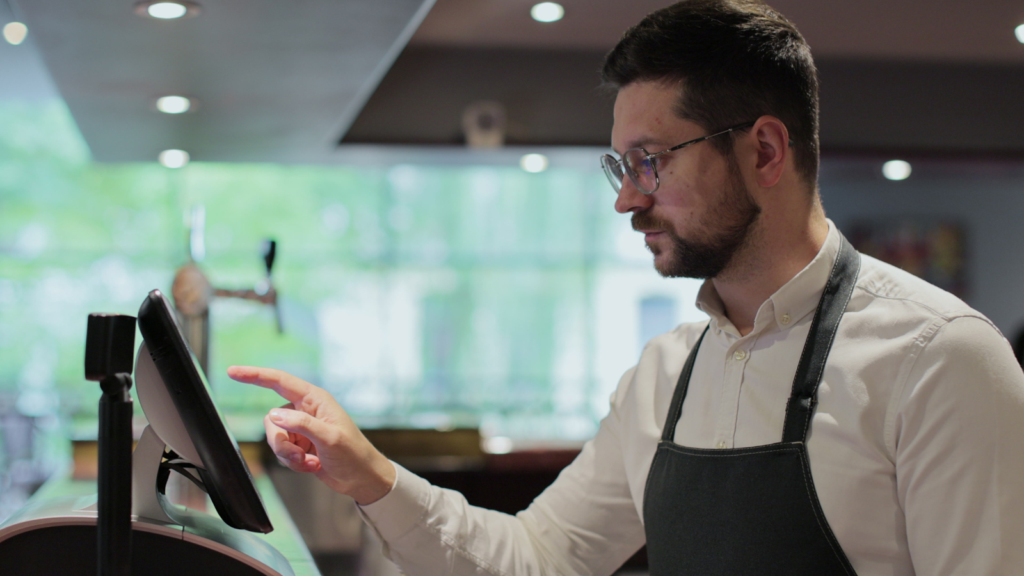
You have been planning this new store opening rollout for months. The build-out is done. The crew is trained. The food is ready. And then, ten minutes before your first customer pulls through the drive-thru, the order confirmation board goes dark.
Or the POS is not talking to the kitchen display. Or the drive-thru audio has static that nobody noticed during the walkthrough. Or the cameras are recording but the NVR was never configured with the correct retention settings.
These are not hypothetical scenarios. They are the most common technology problems CGS gets called in to fix at new restaurant openings, often on the day of or the day after. And almost all of them are preventable.
Why Technology Failures Happen On Opening Day
New restaurant builds involve a tight construction timeline and a large number of contractors working in sequence. Electricians, HVAC crews, general contractors, health inspectors, equipment vendors, and franchise approval processes are all running on parallel tracks with interdependencies that are easy to miss.
Technology installations sit inside this complexity in a way that creates specific failure points. Structured cabling needs to go in before the walls close. Camera conduit needs to be in place before the ceiling is finished. Drive-thru cabling needs to be run before the parking lot is poured. When the construction schedule slips and a technology installation gets compressed to meet the opening date, corners get cut. Sometimes intentionally, sometimes not.
The other common failure mode is vendor fragmentation. Most franchise operators manage new store technology by coordinating five or six different vendors: one for the drive-thru system, one for cameras, one for the network, one for the POS, one for menu boards. Each vendor shows up, installs their piece, and leaves. Nobody tests the full stack together before opening day. Nobody owns the result.
The Five Most Common Technology Failure Points
Drive-thru audio that was never properly commissioned
A drive-thru communication system that was installed in a rush and never fully configured is one of the most common opening day problems CGS encounters. The system appears to work during a quick walkthrough. Under real operating conditions, with a car running in front of the speaker post and a full crew working the station, the audio clarity is inadequate. Customers repeat themselves. The crew loses rhythm. The opening rush feels harder than it should.
Proper drive-thru audio commissioning takes time. It involves testing under real operating conditions, not just during a quiet walkthrough. It means adjusting sensitivity, confirming headset range across the full restaurant, and verifying that the speaker post is performing at the level the system is capable of. When this step gets skipped, every transaction on opening day is harder than it needs to be.
Consider what poor drive-thru audio actually costs. According to an Intouch Insight drive-thru trend study, service times are 27 seconds faster when customers do not have to repeat their orders, and inaccurate orders average 50 seconds longer than accurate ones. When a system is not commissioned correctly on day one, those seconds are baked into every transaction from the moment the restaurant opens.
Cabling that was run incorrectly or not tested
Structured cabling that passes a basic continuity test can still fail at Gigabit speeds under load. A Cat6 run that was terminated incorrectly in a wall behind drywall causes an intermittent POS outage that takes three service calls and two weeks to diagnose. A PoE run to a camera that was pulled too tight around a conduit bend loses connectivity when the building temperature changes.
CGS tests and certifies every cabling run before project sign-off. Operators who use a general contractor for their cabling because it was cheaper often find out what was missed on opening week.
POS and kitchen display integration that was never verified
A POS system that is installed and configured in isolation, without end-to-end testing with the kitchen display, drive-thru timer, and back-of-house systems, creates coordination problems on the first busy shift. Orders that go to the wrong display. Timer integrations that do not reflect actual order status. Payment processing that times out under load because the network was not configured for the POS bandwidth requirements.
End-to-end system testing before opening day is not a nice-to-have. It is the difference between a smooth opening shift and one that requires three vendor calls before noon.
Camera systems that were never configured for compliance
A camera system that was installed and turned on is not necessarily a camera system that is configured correctly. NVR retention settings that were left at default may not meet franchise or insurance requirements. Camera placements that looked correct on a floor plan may have blind spots under real conditions. For McDonald's franchisees, a system that does not meet NRBES zone coverage requirements is a compliance problem from day one.
CGS verifies camera configuration and retention settings as part of every installation. Operators who had cameras installed by a contractor who was not familiar with NRBES requirements often discover the gaps during a franchise compliance review rather than during commissioning.
Network infrastructure that was not sized for the full technology stack
A commercial WiFi network that was designed for a typical office environment is not designed for a QSR operating environment. Kitchen interference, the density of connected devices including POS terminals, kitchen displays, cameras, and mobile ordering integrations, and the uptime requirements of a drive-thru operation require network infrastructure that was specified for those conditions.
An undersized network reveals itself during the first lunch rush. Mobile ordering drops. The POS slows. The drive-thru loses connectivity. None of those problems are obvious during a quiet walkthrough on a Tuesday morning before opening.
What Prevents Opening Day Technology Failures
The answer is not more vendors. It is fewer.
Operators who consistently have clean technology openings work with a single partner who owns the full stack: drive-thru systems, cameras, network, cabling, POS integration, and menu boards. When something is not working during commissioning, there is no finger-pointing between vendors about whose piece is responsible. The partner finds it and fixes it, because there is nowhere else for the problem to go.
It also means sequencing. A single technology partner who understands construction timelines can work with the general contractor to ensure cabling goes in at the right phase, conduit is in place before the ceiling closes, and drive-thru infrastructure is in before the parking lot is poured. Vendor fragmentation makes this coordination nearly impossible.
And it means testing. Not a walkthrough. Not a quick system check. A full-stack test under conditions that simulate opening day volume, before opening day arrives.
CGS handles new restaurant technology installations for QSR operators across Georgia, South Carolina, and Ohio. We have OTP Pro certified technicians on staff and handle everything from structured cabling to drive-thru commissioning to NRBES camera compliance. If you have a new build or remodel coming up and want a technology partner who owns the full stack from cabling to commissioning, contact us. The time to have that conversation is before the walls close, not the day before you open.
Don't Wait Until Opening Day to Find Out What's Missing
CGS handles full-stack technology installations for QSR operators across Georgia, South Carolina, and Ohio — from structured cabling and drive-thru commissioning to NRBES camera compliance. One partner, one point of accountability, zero opening day surprises.
Talk to a Technology Partner
About the Author
Written by Grant Wycliff, President of CGS. Grant works with QSR operators across Georgia, South Carolina, and Ohio on new restaurant technology installations, drive-thru commissioning, and franchise compliance. CGS is a McDonald's OTP-approved technology partner with certified technicians on staff handling everything from structured cabling to NRBES camera compliance. Connect with us on LinkedIn.