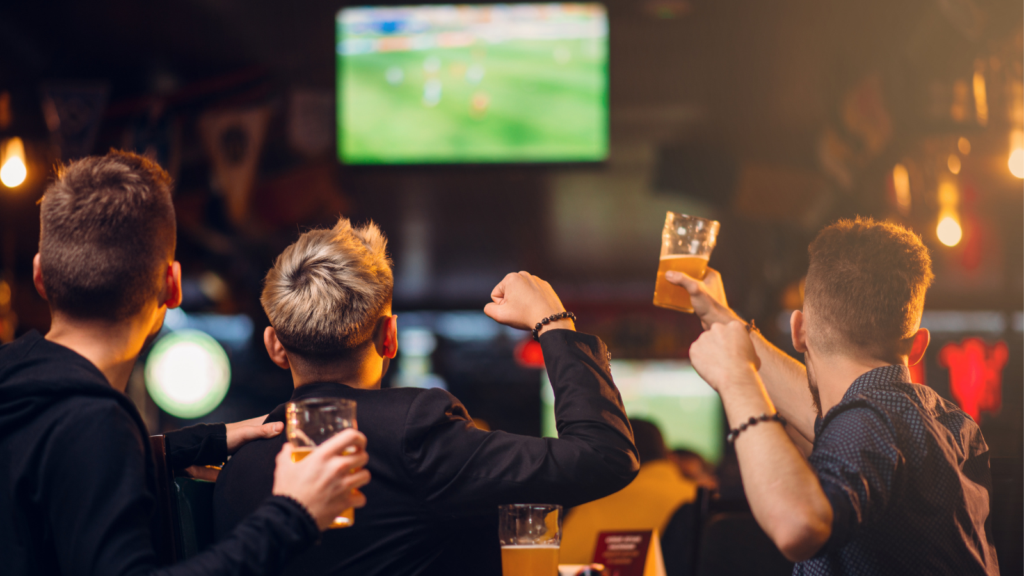
The conversation about streaming in bars and restaurants has been dominated by one question: which service? EverPass, Hulu, DirecTV Stream, ESPN Plus. Which subscription covers what you need for the room you want to run.
That is not the hard question. The hard question is whether the building you are running can actually support what streaming requires. Most bars and restaurants that have had problems with streaming services were not let down by the subscription. They were let down by the infrastructure the subscription was running on.
This is what the infrastructure side of a streaming-ready bar or restaurant actually looks like, and where most operators discover they have a gap.
Streaming Is Not Satellite
Every screen in a satellite-equipped bar pulls content from one shared signal. One dish on the roof, one signal, the same feed everywhere. The cabling and switching systems that manage satellite delivery are designed for that model. They are not designed for streaming.
Streaming works differently. Each screen or media player pulls its own feed over the internet. Four simultaneous games on four screens means four simultaneous streams, each competing for bandwidth. If your network was built for a different workload, and most commercial networks were, you find out during the first Sunday with a full room.
What a Streaming-Ready Network Actually Requires
Enough bandwidth for the number of screens you are running
Streaming services typically recommend a minimum of 10 Mbps of dedicated bandwidth per stream for live sports events. If you are running eight screens with eight simultaneous games, you need 80 Mbps of clean, dedicated bandwidth for the streams alone, before accounting for guest WiFi, POS, and any other connected systems. Many commercial internet connections in bars and restaurants were sized for a different era and a different workload.
A segmented network
The single most common cause of streaming failure during a busy shift is an unsegmented network. When streaming, POS, guest WiFi, and security cameras are all competing for the same connection, a surge in guest WiFi traffic during halftime can destabilize a stream mid-play. Proper network segmentation puts each type of traffic on its own VLAN so they cannot interfere with each other. POS downtime does not touch streaming. A guest WiFi spike does not touch the cameras. Streaming does not touch POS. Each system gets the bandwidth it needs regardless of what the others are doing.
Commercial-grade access points, not consumer routers
The WiFi router that came with your internet service was not designed for a bar full of people on game day. Commercial access points handle device density, interference from adjacent networks, and sustained high-throughput loads that consumer hardware fails under. If your streaming setup is running through a consumer router, that router is one busy Sunday from becoming the explanation for why the feeds kept dropping.
Media players that can handle the load
Most streaming services require a dedicated media player per screen or per zone. The quality of the media player matters. Consumer-grade streaming sticks and boxes are not rated for the operating temperatures, the hours, or the continuous use demands of a commercial environment. They fail. Commercial-grade media players are designed for this.
The Control System Problem
Bars and restaurants that switched from satellite to streaming often discover a problem they were not expecting: the control system that used to switch their satellite feeds does not understand streaming media players.
Satellite receivers respond to specific commands. A centralized control system could route any satellite source to any screen in the building with a single button. Streaming media players often require manual navigation on the player itself, or a different control system that can communicate with them over IP. For a bar with 20 screens showing 8 different games, this is not a minor inconvenience. It is a significant operational burden during the busiest shift of the week.
Solving this requires either updating the control system to support IP-based source routing, or replacing it. The size of that project depends on what you have and how the building was wired. It is also the item most frequently missed by AV companies that do basic streaming installations without assessing the full system.
The Cabling Question
The cabling infrastructure that runs from your switch to your screens and media players matters more than most operators realize. PoE (Power over Ethernet) cabling allows media players to receive both data and power through a single Cat6 run, which simplifies installation and reduces the number of power outlets and cables that need to be managed behind each screen. Buildings with older cabling infrastructure may need runs upgraded or supplemented to support current streaming hardware.
What a Proper Assessment Covers
An honest streaming infrastructure assessment for a bar or restaurant covers six things: current internet bandwidth and whether it is sufficient for the number of screens you plan to run, network segmentation and whether streaming will have dedicated bandwidth isolated from guest WiFi and POS, access point capacity and placement for the device density in your space, media player compatibility with the streaming services you are subscribing to, control system compatibility with streaming hardware, and cabling infrastructure from the switch to each screen.
Most of the operators CGS walks through have a gap in at least two of these. Most of those gaps are fixable. The question is whether they get fixed before the season starts or discovered when the first Sunday does not go as planned.
CGS Works With Bars and Restaurants on Streaming Infrastructure
CGS is a commercial AV and technology integrator serving bars and restaurants across Georgia, South Carolina, and Ohio. We handle the full streaming infrastructure stack: network segmentation, commercial WiFi, structured cabling, media player deployment, and control system integration. One partner, no finger-pointing when something is not working.
Frequently Asked Questions
Does my existing internet connection need to be upgraded for streaming?
Not necessarily, but it needs to be assessed. The question is not just raw speed but how that speed is allocated. An internet connection shared between streaming, POS, guest WiFi, and cameras may have adequate total throughput but inadequate dedicated bandwidth for streaming under real operating conditions. The assessment covers this.
Can I use my existing TV and AV system with streaming services?
Depends on the system. The screens themselves are usually fine. The question is whether the switcher, the control system, and the cabling can support streaming media players the way they supported satellite receivers. This is the most common gap in bar and restaurant streaming setups and the one that gets missed most often.
How much does a streaming infrastructure upgrade cost?
It depends entirely on what you have and what you need. A bar with modern commercial network infrastructure, recent cabling, and a control system that supports IP-based source routing needs far less work than one with a consumer router, aging cabling, and a legacy control system. The assessment gives you the actual number for your specific space.
Not Sure If Your Setup Can Handle a Packed House? Find Out Before It Matters.
CGS is a commercial AV and technology integrator serving bars and restaurants across Georgia, South Carolina, and Ohio. We handle the full streaming infrastructure stack: network segmentation, commercial WiFi, structured cabling, media player deployment, and control system integration. The assessment is free.
Schedule Your Free Assessment
About the Author
Written by Grant Wycliff, President of CGS. Grant works with bars, restaurants, and commercial venues across Georgia, South Carolina, and Ohio on streaming infrastructure, commercial AV, and full-stack technology integration. CGS is a full-service commercial AV and technology integrator serving QSR operators, bars, restaurants, and commercial businesses. Connect with us on LinkedIn.