Every conversation about drive-thru performance, camera system reliability, POS uptime, streaming service stability, and digital menu board connectivity eventually arrives at the same underlying question: what is the network doing?
Commercial WiFi is the least visible system in a QSR or commercial operation. When it works, nobody thinks about it. When it does not, every other system that depends on it fails simultaneously, and diagnosing the problem requires eliminating every other possible cause before arriving at the obvious one.
Most commercial operators treat network infrastructure as a utility, something that was set up when the building opened and checked only when something stops working. The operators who treat it as a strategic foundation for everything else they run have fewer problems with their drive-thru, their cameras, their POS, and their streaming setup, and they diagnose the problems they do have faster.
What Is Actually Running on Your Network
A typical QSR location in 2026 is running more connected devices than most operators realize. POS terminals. Kitchen display systems. Drive-thru headset base stations. Order confirmation boards. IP cameras. Digital menu boards. Mobile ordering integrations. Back-of-house reporting systems. Guest WiFi. In a location that has added systems incrementally over several years, some of those devices may be on different network segments, some may have been added without any network planning at all, and the whole stack may be running on infrastructure that was sized for a different era.
When all of those systems are competing for the same connection without segmentation, the failure mode is not a single system going down. It is every system performing slightly worse simultaneously. The POS slows slightly during the lunch rush. The camera feed drops frames. The drive-thru system has occasional communication lag. The streaming service buffers at peak times. None of it is dramatic enough to call a technician. All of it is degrading performance across every system in the building.
Why Network Segmentation Matters
Proper network segmentation means each category of traffic operates on its own VLAN, isolated from the others. Guest WiFi does not compete with POS. A surge in mobile ordering traffic during a lunch rush does not touch the drive-thru system. A connected device on the guest network cannot reach the camera system or the payment processing network.
Segmentation matters for two reasons. The first is performance: isolated traffic means each system gets the bandwidth it needs regardless of what the others are doing. The second is security: a POS system sharing a network with open guest WiFi is a PCI compliance exposure. Payment card data needs to be on a network segment that is isolated from any network that is accessible to the public. Most QSR operators who have not had a network assessment in the past three years are carrying this exposure without knowing it.
The Access Point Problem
Consumer-grade WiFi routers and residential access points are not designed for the operating environment of a commercial kitchen. Heat, grease, humidity, and the density of connected devices in a QSR environment exceed the design parameters of consumer hardware. A consumer router that works fine in a home or small office will degrade under sustained QSR operating conditions and fail in ways that are difficult to diagnose because the failure is gradual.
Commercial-grade access points are designed for the device density, interference resistance, and sustained throughput requirements of a commercial environment. They are also designed to be managed centrally, so when something is not performing correctly, it shows up in the management system rather than requiring someone to notice that one corner of the dining room has slow WiFi.
The difference in cost between a consumer router and a commercial access point is modest. The difference in what they cost you in system reliability over three years is not.
Bandwidth and the Streaming Problem
The streaming conversation has made bandwidth visible in a way it was not two years ago. Bar and restaurant owners who signed up for streaming services and then had a bad opening weekend discovered that their internet connection was sized for a different workload.
But bandwidth is not just a streaming problem. A QSR location running mobile ordering, POS processing, drive-thru system communication, and IP cameras simultaneously is running a continuous high-bandwidth load that was not present when most of these locations sized their internet connection. An internet connection that was adequate three years ago may be a bottleneck today, and the bottleneck will show up in every connected system rather than in any single one.
A proper network assessment covers not just the access points but the internet connection itself: the total bandwidth available, how it is allocated across the systems running on it, and whether the allocation matches the current load.
What a Network Assessment Actually Covers
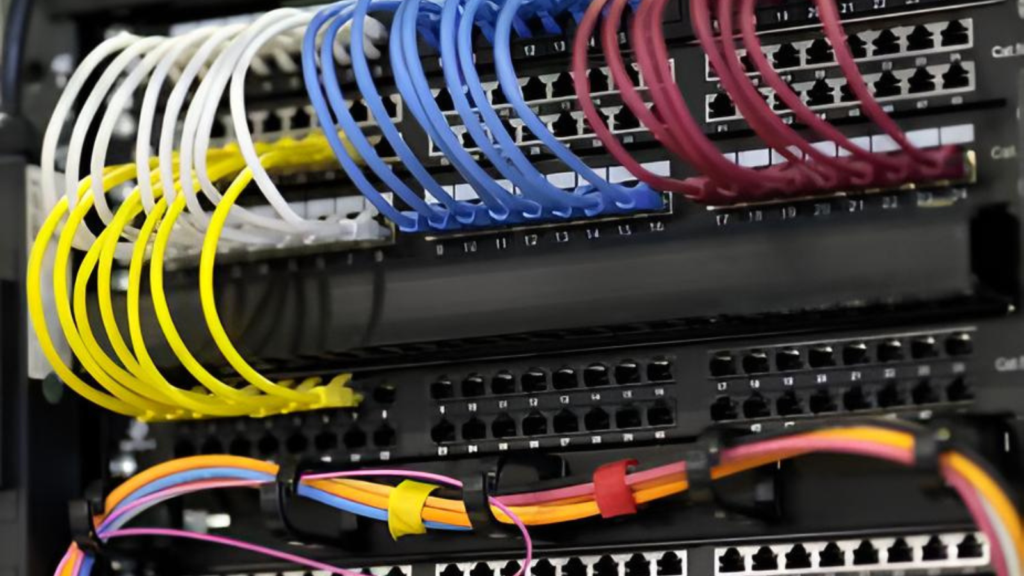
A commercial network assessment for a QSR or commercial location covers six things: the internet connection speed and whether it is sufficient for the current connected device load, the access point hardware and whether it is rated for the operating environment, the network segmentation and whether traffic is properly isolated by type, the firewall and router configuration, the cabling infrastructure that the wireless access points and wired devices connect to, and the documentation of what is on the network and how it is configured.
Most locations that have not had a network assessment in the past two to three years have at least one meaningful gap. The assessment tells you exactly what it is rather than letting you discover it when the lunch rush exposes it.
CGS Installs and Manages Commercial Network Infrastructure
CGS designs and installs commercial WiFi and network infrastructure for QSR operators and commercial businesses across Georgia, South Carolina, and Ohio. We handle the full stack: structured cabling, commercial access points, network segmentation, firewall configuration, and the documentation that tells you and every technician who comes after us exactly what is in the building and how it is configured.
If your network has not been professionally assessed in the past two years, contact us.
Frequently Asked Questions
How do I know if my current network infrastructure is adequate?
The warning signs are systems that perform inconsistently, particularly during peak hours. POS slowdowns during the lunch rush, camera feeds that drop periodically, drive-thru communication lag, and streaming services that buffer during busy periods are all indicators of network infrastructure that is not adequate for the current load. A professional assessment confirms whether the issue is the network or one of the systems running on it.
What is a VLAN and why does it matter for a QSR?
A VLAN, or virtual local area network, is a configuration that logically separates traffic on the same physical network. For a QSR, this means POS, drive-thru, cameras, and guest WiFi can each operate on their own segment without interfering with each other, even though they share the same physical cabling and switches. It is both a performance tool and a PCI compliance requirement for locations processing payment cards.
Does CGS replace existing network equipment or work with what is in place?
It depends on what is in place. Consumer-grade equipment in a commercial environment is typically replaced because it is not rated for the operating conditions. Commercial-grade equipment that is properly configured may stay in place with configuration changes. The assessment determines the right answer for each location.
When Did Your Network Last Get a Professional Assessment?
CGS designs and installs commercial WiFi and network infrastructure for QSR operators and commercial businesses across Georgia, South Carolina, and Ohio. We handle the full stack: structured cabling, commercial access points, network segmentation, firewall configuration, and documentation. If your network has not been professionally assessed in the past two years, contact us.
Schedule a Network Assessment
About the Author
Written by Grant Wycliff, President of CGS. Grant works with QSR operators and commercial businesses across Georgia, South Carolina, and Ohio on commercial WiFi, network infrastructure, and full-stack technology integration. CGS is a McDonald's OTP-approved technology partner handling structured cabling, commercial access points, network segmentation, and technology systems for operators across the region. Connect with us on LinkedIn.